Arka Project
Vehicle's Aerodynamics
How airflow management, drag reduction, and solar array integration shaped the Arka body design.
360° VIEW
The Goal- Energy In = Energy Out
Solar racing is a game of margins. Your only energy source is the sun, and your only job is to waste as little of it as possible. Every design decision on Arka traces back to one fundamental equation i.e. maximising energy input from our 4m² solar array while minimising energy expenditure through drag. These two goals shaped everything: the body geometry, the aerodynamic form, the weight target, and the material choices.
Why Aerodynamics is the Most Important Thing
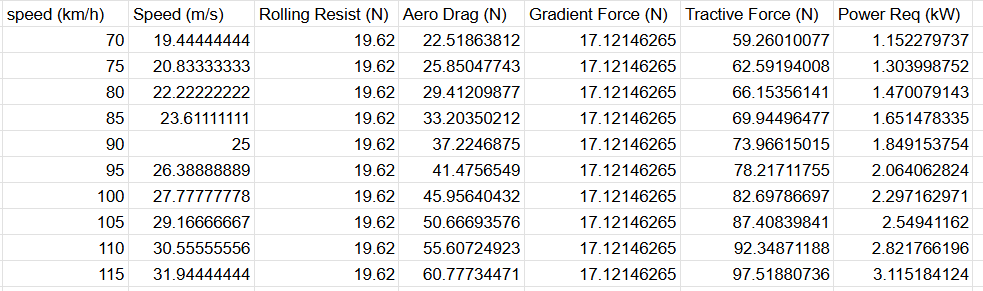
In any race you're fighting two forces- rolling resistance and air. Aerodynamic drag scales with the square of velocity, meaning it grows aggressively as the car speeds up. Beyond a certain point it completely takes over, making rolling resistance almost irrelevant. Our model confirmed this, which made aerodynamics not just important but the single most consequential design domain on the entire car.
Design Philosophy
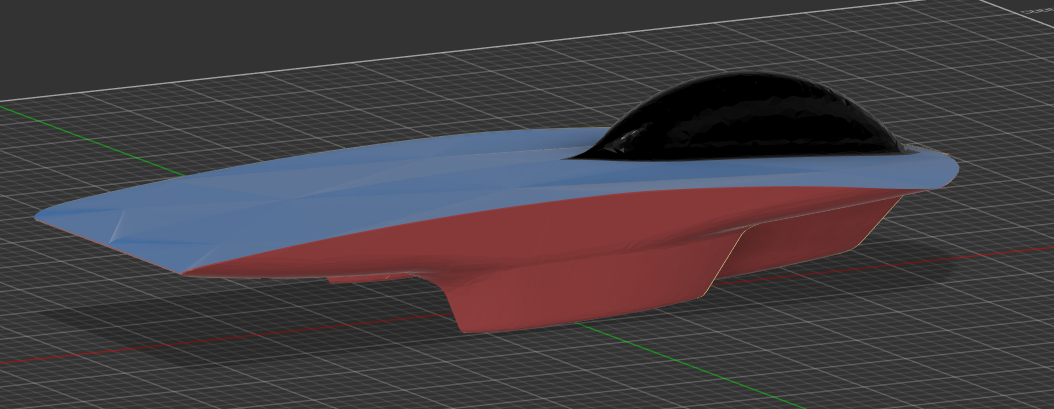
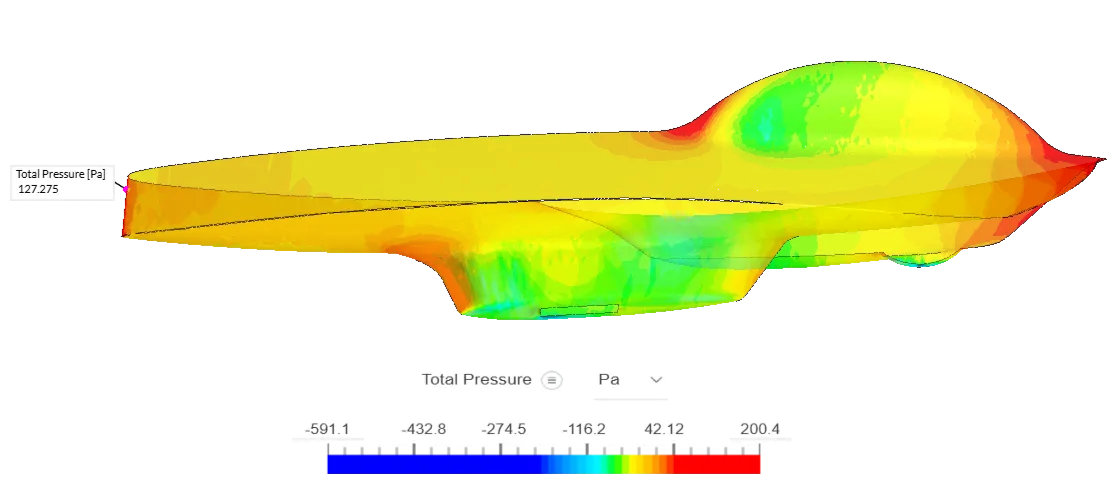
Our aerodynamic design is engineered to minimize total vehicle drag, which is the sum of pressure drag, viscous (skin-friction) drag, and interference drag. Our strategy begins at the vehicle's leading edge, where a long forward canopy houses the 4 m² solar arrays. This shape establishes a highly predictable and clean boundary layer over the main body. This managed flow is then presented to the driver pod and wheel fairings, which are shaped to perform optimally within this pre-conditioned wake.
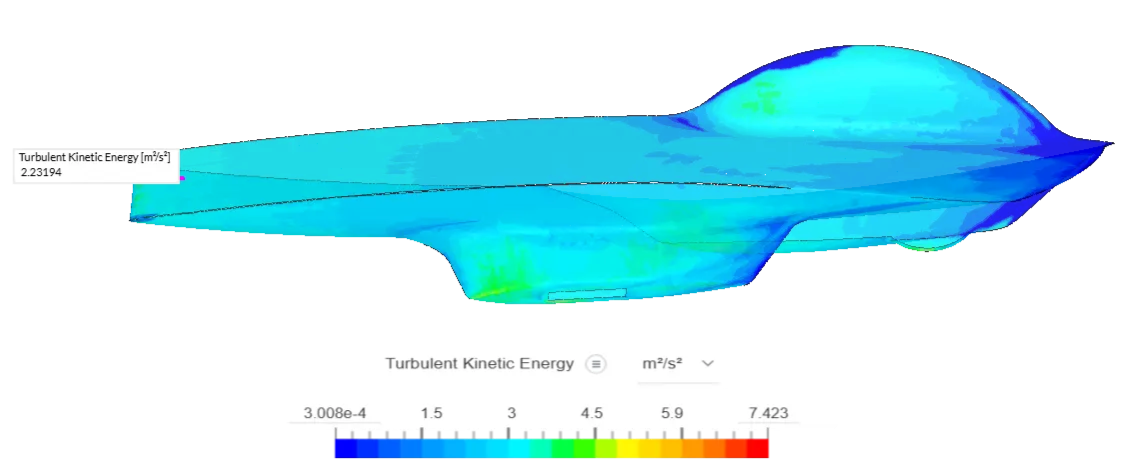
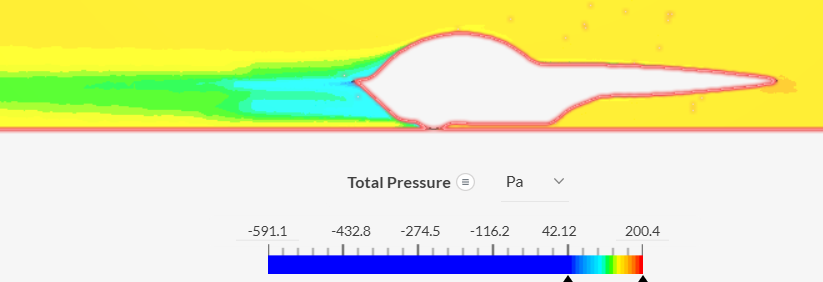
CFD Results
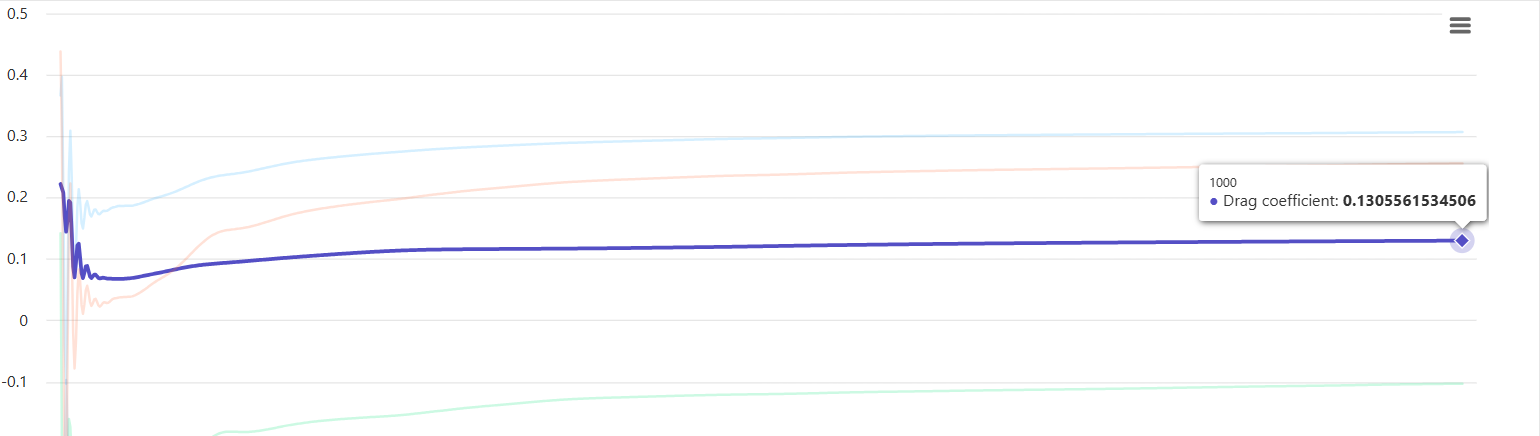
Solar racing is typically dominated by monohull and catamaran layouts optimised purely for aerodynamics. We had different constraints, the BSVC regulations required maximising solar panel area, and our manufacturing realities pushed us toward a front-facing panel layout. Within those boundaries, we achieved a drag coefficient of 0.13. For context, the world famous Tokai Challenger sits at 0.11.